

Growing Iowa’s Composting Movement to National Leadership
Growing Iowa’s Composting Movement to National Leadership
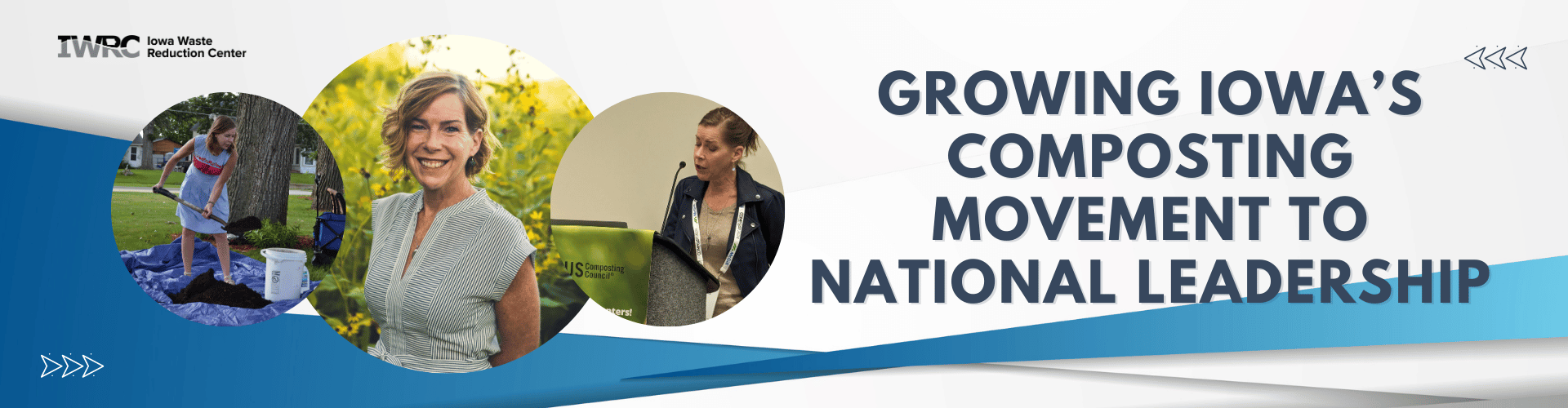
When I first stepped into the world of diverting organic waste from landfills 13 years ago at the Iowa Waste Reduction Center (IWRC), I was green. I was new. I had never worked on a problem that encompassed every corner of our state.
At about the same time, the Iowa DNR had carried out waste characterization studies of landfilled materials and food waste had been rising in the overall municipal solid waste category from about 10% in 1998 to almost 20% in 2022. Food waste has consistently been the single most prevalent material tossed in Iowa landfills.
My clients needed help finding diversion strategies for inedible food waste and composting was a great solution, still is! However, there was virtually no infrastructure in Iowa supporting the compost industry with the vast majority of Iowans lacking access to food waste composting services.
Discovering the Power of Compost
It seemed like a great fit to take the US Composting Council’s (USCC) 40-hour training to learn how to compost, so in 2015 I signed up. I was blown away by the quality of the training and the USCC.
I was excited at the thought of turning organic waste into a product that improves soils, removes pollutants, feeds plants, holds moisture, and limits erosion. I was hooked, I was thrilled, I was chomping at the bit to show my clients how to start composting themselves since there was virtually no public infrastructure to help them.
My clients needed help finding diversion strategies for inedible food waste and composting was a great solution, still is! However, there was virtually no infrastructure in Iowa supporting the compost industry with the vast majority of Iowans lacking access to food waste composting services.
The Roadblocks to Composting in Iowa
As I began working with clients to spread my new-found knowledge about how to compost, I ran into the same roadblocks repeatedly:
- The vast majority of my clients had no access to carbon for composting
- Staff were in short supply to get it going
- There was not enough space to set up a compost project
- Finding just the right person to champion the initiative wasn’t happening.
Building Iowa’s Composting Community
I began to think about composting and how to build infrastructure in Iowa. So, once again I turned to the USCC. I began to make a list of everyone in Iowa I had talked with about composting and scheduled a meeting to discuss bringing a State Chapter of the USCC to Iowa. Would this help grow infrastructure?
Fast forward to the year 2020 when Iowa officially became home to a U.S. Composting Council State Chapter: the Iowa Composting Council (IACC) under the umbrella of the Iowa Recycling Association (IACC).
Statewide Progress in Composting
Since then, the IACC has done incredible things to help grow composting infrastructure. One of the most impactful is that IACC board members served on a work group to change the rule under the guidance of the Iowa DNR. The new rule is slated to take effect later this year, which will drastically increase feedstock limits without needing a permit.
I envision the compost industry booming over the next few years as regulatory and financial burdens associated with opening and operating a compost site have been significantly decreased thanks to the Iowa DNR’s work and the board members of the IACC that contributed to this work.
A National Role in a Growing Movement
My love for the USCC and the support I’ve felt when trying to do the seemingly impossible, grow composting infrastructure, only bolstered my belief in the national organization. I wanted the USCC to put effort into the Midwest, where there are no landfill bans to help grow infrastructure, where we are not the East or West Coast, but where much of the world’s food is grown.
I decided to run for the USCC’s Board of Directors and won the election! I was elated. I met some of the smartest people in the industry and served alongside them, people from all over the country who were manufacturing compost, people who were educating others about compost, people who conduct research and use compost, people who haul food waste to compost sites. It was fantastic! I met my people!
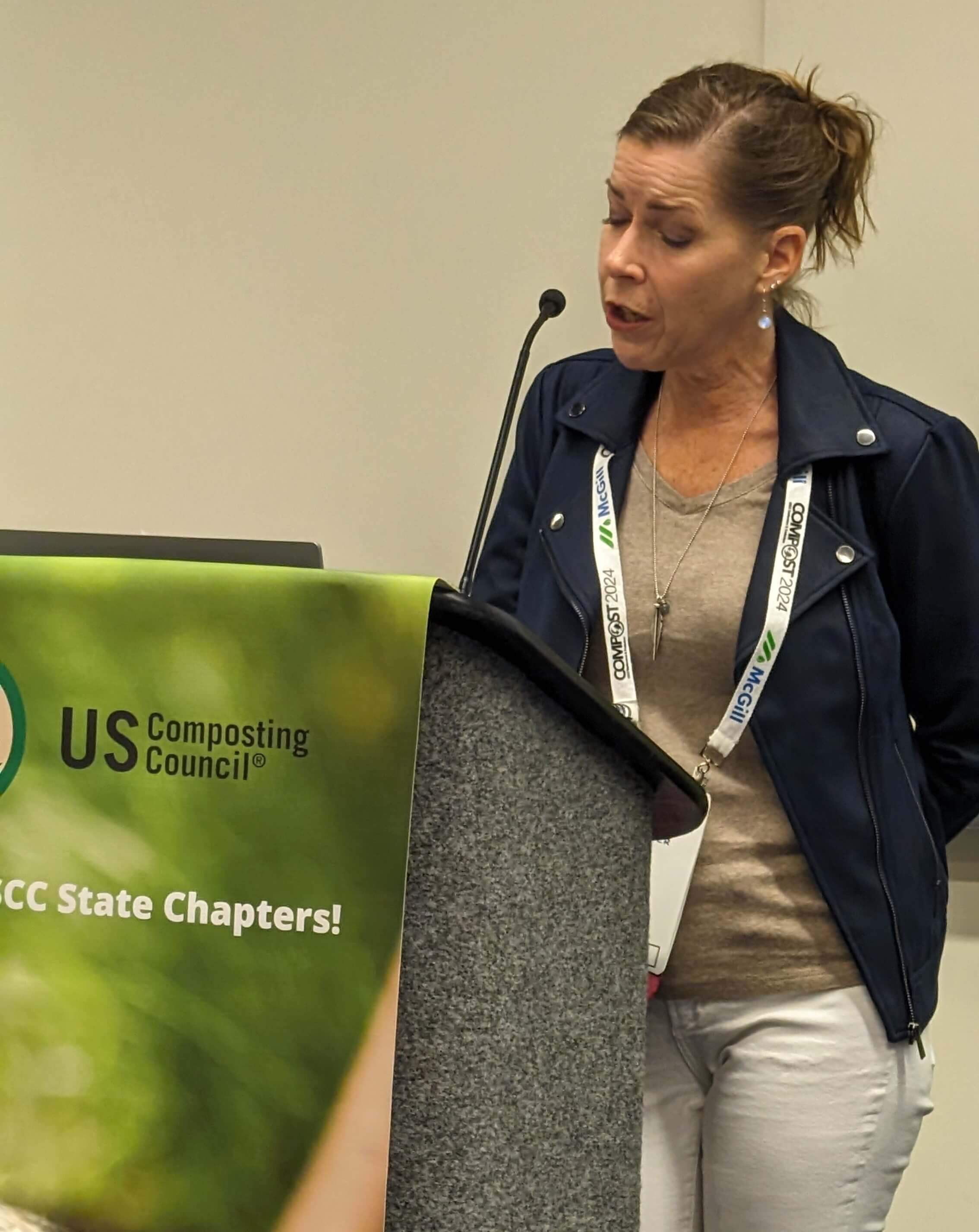
For the last seven years, I have been deeply involved in the organization and served in several leadership roles:
- Chair, Chapter Advisory Committee
- Chair, Nominations Committee
- Secretary, Executive Committee
- Vice President
- President of the U.S. Composting Council (2024–2025)
My Takeaways As President of USCC
Being President of the USCC was a colossal honor but it was also hard work, long hours at times, and working to solve extremely complex problems.
Yet I thrived there, I loved the challenges presented to me, and my devotion to the USCC only grew stronger. Through my work, I gave the USCC my heart and soul, I appreciated every single staff and board member’s input, feedback, and efforts, and I lost sleep when issues arose.
But what impressed me the most, was how much the USCC gave to me. It helped me hone my leadership skills and my ability to find solutions that meet-in-the-middle, it bolstered my belief in the full-circle-solution of compost to solve so many environmental problems, and armed me with notoriety that comes with being President of a national organization. 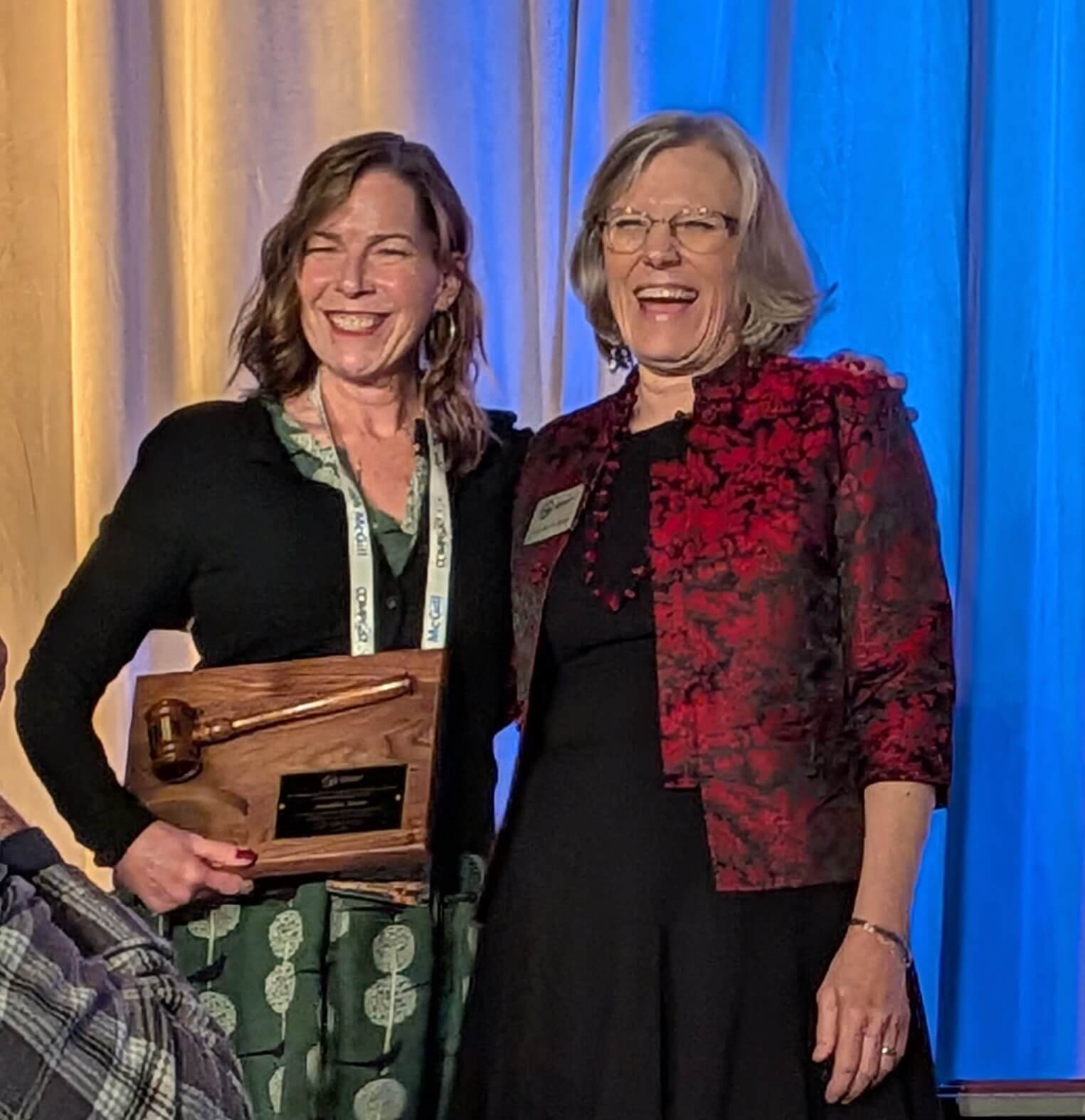
But the absolute best are the people, the friends, and the networks I have across the country. People who share my passion, people who are genuine, good, and intelligent, people who stop by when they’re in Iowa, and people who I not only call my friends and colleagues, but my family!