

The Potential Hazards of Lithium-Ion Batteries
The Potential Hazards of Lithium-Ion Batteries
Understanding lithium-ion battery technology and risks
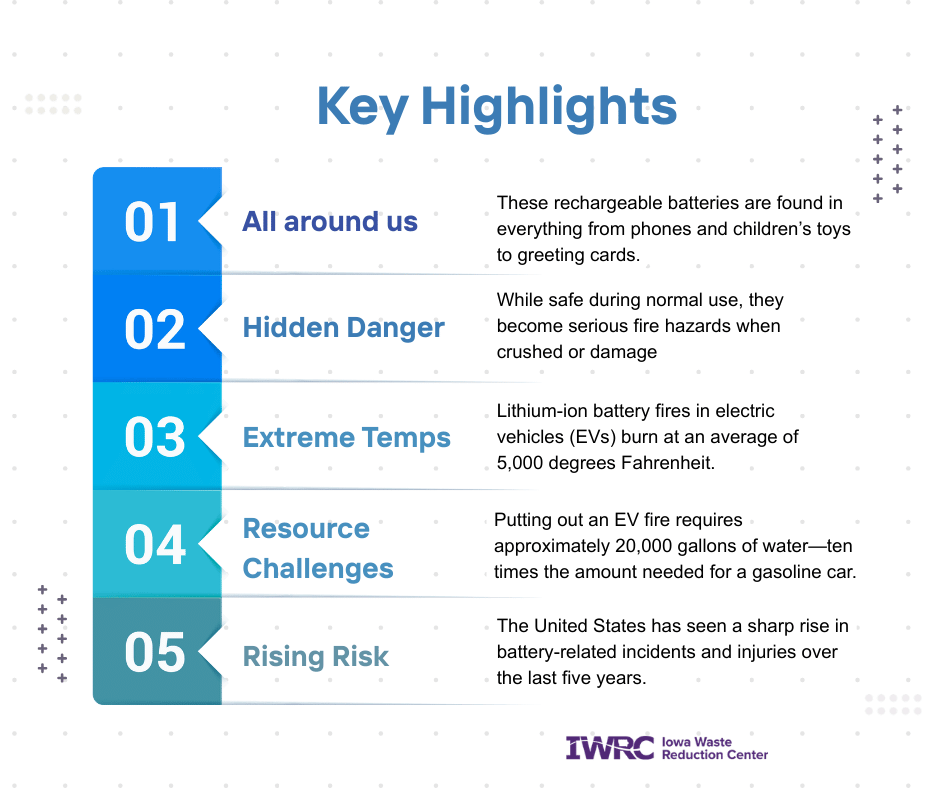
Lithium-ion batteries are rechargeable batteries that have become increasingly popular over the last several decades. Recently, they appear more and more in our daily lives. From our phones to children’s toys and even greeting cards, these batteries have become part of our everyday routines, whether we realize it or not. They are almost impossible for us to avoid because they make life so much easier and accessible.
The science of battery fires
It is normal for batteries to produce some kind of heat while running, which is why our devices get warm after being used for long periods of time. The reason these devices don’t typically burn us when we use them is that the heat has a way to escape, typically through a small vent.
However, danger arises when the battery's physical integrity is compromised. When a lithium-ion battery gets crushed or becomes severely damaged:
- The heat can’t escape,
- Internal short circuits occur
- Resulting in a fire and, in extreme cases, a small explosion.
Fire intensity and resource consumption
One of the main concerns with fires caused by lithium-ion batteries is the amount of effort it takes to extinguish them.
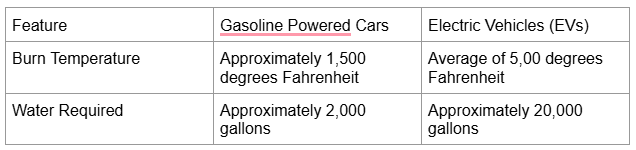
The large consumption of resources is a huge reason why lithium-ion battery fires are so detrimental and hazardous to the facilities where they occur.
National trends and safety statistics
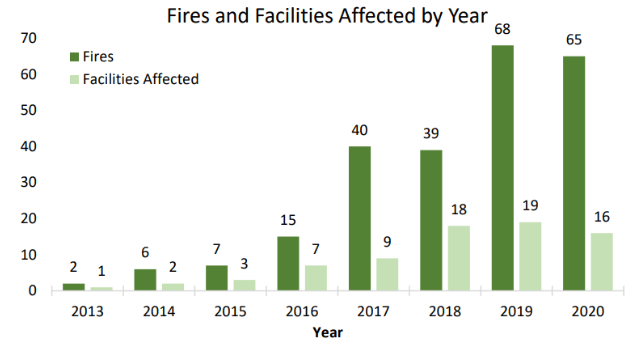
Within the last five years, there has been a sharp rise in the number of fires caused by lithium-ion batteries in the United States. As more companies incorporate these batteries into their products, and consumers purchase the products, battery disposal becomes a more significant reality. Resource Management Superintendent of the Iowa City Landfill, Jennifer Jordan, believes that with an increase in battery use in our daily lives, the amount of batteries that end up in our landfills also increases.
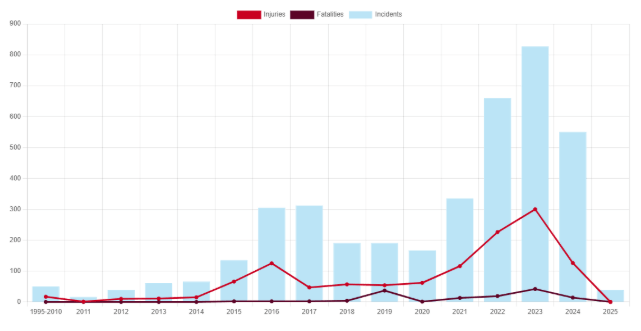
According to the UL Research Institute, there were around 550 fires caused by lithium-ion batteries in 2024 throughout the United States. These fires were likely caused by batteries from cars, electric scooters, laptops, cellular devices, nicotine devices, and other energy storage systems.
The impact on waste infrastructure and communities
While lithium-ion batteries are safe to use and have a very low probability of danger while in use, they become a serious fire hazard when they end up in landfills or recycling facilities. When these batteries get run over and crushed during compaction in a facility, they can easily start a fire that takes a long time to put out. Additional potential impacts can include injuries, external emergency response, service disruptions, and monetary losses.
Facility vulnerability
According to the U.S Environmental Protection Agency (EPA), 64 waste facilities experienced a total of 245 fires that were caused by, or most likely caused by, lithium-ion batteries over a seven-year period.
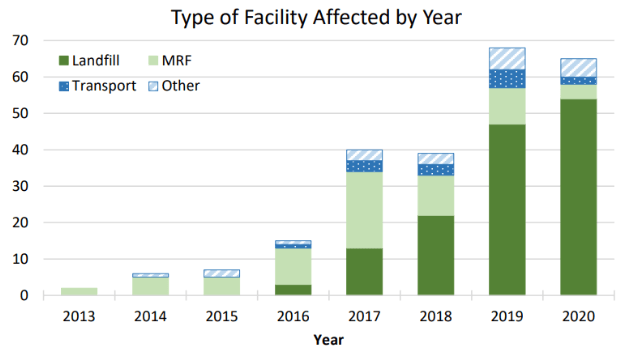
When it comes to what kind of facilities were affected most by these fires, landfills have been shown to be the most affected type of facility.
Case Studies: From big cities to local communities
These fires are not only impacting the facilities where they’re occurring, but they’re also impacting the surrounding communities as well.
New York City
One notable place that has experienced a large amount of fires caused by lithium-ion batteries is New York City. Due to their large population and the amount of batteries used for transportation methods around the city, such as e-bikes, scooters, and other modes of transportation, there's an increased amount of batteries ending up in their local landfills. As a result, the amount of fires that occur has also increased. According to Seneca Insurance and the Fire Department of New York, e-bikes powered by lithium-ion batteries in New York City accounted for 267 fires throughout 2023.
Iowa
Across the state, landfills are seeing an increase in fires due to lithium-ion batteries, despite recycling programs that have been developed. According to Jordan, the Iowa City Landfill has seen 24 fires in the last three years, with at least 13 of them attributed to lithium-ion batteries. In 2025 alone, there were 11 fires caused by these batteries, which was a sizable jump from the two fires that were recorded in 2024.
Prevention and proper disposal
Lithium-ion batteries won’t be going anywhere soon. To help prevent these fires and protect waste and recycling workers, make sure batteries are going to the correct places to be recycled, instead of being thrown in the trash.
Ways to dispose of them correctly:
- Contact your local solid waste agency.
- Visit a big-box retailer
- Check with your local hardware store.
If we dispose of batteries correctly, we can decrease the amount of fires that occur at landfills and recycling facilities and, in turn, help our community!